|
|
April 27, 2012
As an educator who’s been receiving student email from around the world for the past 15 years, I can tell you that kids are desperately seeking adult leadership to deal with school bullying. (See my review of the movie BULLY) The way 6th-8th graders describe it, in often heart-breaking terms, is that there is “no point in talking to teachers or the principal about this, because they do NOTHING.”
At this point, when the problem has been sufficiently identified so that everyone knows exactly what bullying is, any further talk talk talk is the same as doing nothing. Talk is cheap. School assemblies with outside speakers may not be ‘cheap’ but they do allow a school administration that doesn’t prioritize character education in any discernible way to tell distraught parents: “We’re handling it. We had an anti-bullying assembly.”
Piffle.
Even the most inspirational student assembly has no power to change a school culture. Not by its lonesome. Because a school’s culture is a living, breathing entity. Each school day, moment-by-moment, and each night on social media, all individuals within that school community contribute to the culture. If a school is truly serious about challenging the Culture of Cruelty you’ve got to do way more than talk. You need to call a community-wide meeting and give each stake-holder an opportunity to speak – that includes all students, teachers, coaches, administrators, support staff (bus drivers, office personnel, after school program staff, etc.). Conduct a Truth and Reconciliation session. Get real. Express the hurt. The anger. The frustration. Cop to the injustice. Take responsibility for what you’ve done and what you’ve failed to do. Apologize. Make amends. Work together to develop strategies for moving forward. Once the strategy for a culture of inclusion is in place, do not fail for one moment to foster it so it can take root and thrive.

April 21, 2012
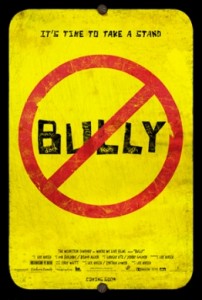 In one of the opening school scenes of the new documentary Bully, a kid with a shaken expression and an ice pack on his head is approached by his school principal who asks, “Oh, what happened to you?” To which the kid replies, “Johnny shoved my head against a nail.” In one of the opening school scenes of the new documentary Bully, a kid with a shaken expression and an ice pack on his head is approached by his school principal who asks, “Oh, what happened to you?” To which the kid replies, “Johnny shoved my head against a nail.”
I realize school principals see and hear a lot from students during a typical day and much of it is innocuous. As school administrators, they have to be able to differentiate between ‘drama’ vs the real stuff or they’d never make it to 3rd period with their sanity in tact. But an upset child with an ice pack requires attention, so the principal examines the back of the kid’s head and blithely reports, ‘Well, I don’t see a hole.”
That was a tip off that there wasn’t going to be a whole lot of empathy from this administrator. In fact, I was half-expecting she’d ask, “And what did you do to make Johnny so mad?” Instead she shooed the kid off to wherever. Another bullying incident swept aside.
That frustrated me. In fact, the whole audience seemed frustrated by a lot of what we saw in Bully. Not that the scenes with the victims weren’t compelling. Oh they were! I winced, I hid my eyes, I cried. But mostly, my fellow-movie goers and I sat incredulous at the consistent insensitivity of folks who are responsible for the safety and well-being of the students in their care.
Which brings up the scenes of violence on the school bus. Truthfully, I’ve seen much worse filmed by security cameras on school buses. But the bus footage in Bully was made by the filmmakers. They were right there, witnessing a child (Alex) being pushed, hit, shoved, choked, and stabbed with a pencil on numerous occasions. I watch Nature documentaries and I understand that when the lion is hunting the gazelle the filmmakers do not interfere with the ‘natural order’ of things. If the prey gets caught, the camera keeps rolling. But we’re talking about people standing by and watching while a child is being hurt. The film crew continued filming for the benefit of their movie. That’s repugnant. At one point, it must have been too much for them because they put up an inter title saying “Because the violence was escalating and we were concerned for Alex’s safety, we showed the footage to his parents and the school administration.”
What the hell took them so long?! Standing back and filming this cruelty felt like a major betrayal to Alex and his parents, who trusted the filmmakers and opened themselves to them . Where were they when Alex needed help? Apparently more concerned about their movie than the child.
The film had its moments. Who could not be moved by a memorial service for a victim of bullying? Or by a parent choking on her broken heart as she describes the angelic child who was her son had until she found him hanging from a rope in the closet? But these scenes do not translate into change. And that’s why I’m frustrated. That’s why I’ve had it with feel good rallies, candle-light vigils, t-shirts, plastic bracelets and balloon releases.
I wanted more from this film. It was so hyped after an online petition to get the rating changed from R to PG-13 went viral. Hell, I signed it along with 500,000 other people because we felt so strongly that it needed to be seen by as many kids as possible. All of us were hopeful that this film would add something new to the search for solutions. But the film showed absolutely no evidence that any school is doing anything to teach students that cruelty is unacceptable. And yet there are plenty of schools doing the right thing. Schools where administrators, teachers, counselors, parents and students work together to create an accepting school culture– one that does not tolerate harassment. Some of these schools changed themselves after a tragedy. They took responsibility for what happened in their midst and they learned how to become a more caring place. Other schools have never experienced a student being driven to suicide by bullying, but they work proactively on this issue every day, so it won’t happen there.
Aside from the courageous leadership and determination of the parents of two bully-cide victims in the film, there wasn’t a lot to feel inspired by here. And I wanted to feel inspired. All of us who care about kids need to feel inspired and motivated, otherwise we might as well just join the chorus of those who say “Kids will be kids and there’s nothing we can do about our students’ behavior. Let them work it out themselves.” By not providing a look at a positive role model school, it felt like the filmmakers had no hope to offer.
Look, I’m grateful that this film was made. I applaud the filmmakers for creating a free teacher’s guide. I fervently hope that schools everywhere are screening Bully and that follow-up discussions with students and teachers are ongoing. But this isn’t like the early days of the AIDS epidemic. We know a lot about bullying. We know what kinds of environments help it thrive and we know what it takes to teach kids to treat each other with respect. The challenge, it seems, is showing the leadership at school and at home, to consistently walk the walk.
April 10, 2012
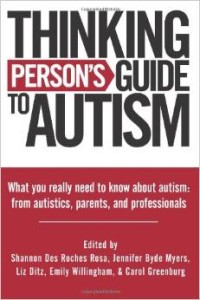 For parents with kids with autism by parents with kids with autism It’s Autism Awareness/Acceptance Month. Excellent, because we all need more awareness and education in this area. I know I sure do. That’s why, a few weeks ago, I interviewed Shannon Des Roches Rosa, self-described “Potty-mouthed Mom” behind the blog, Squidalicious: Parenting, Autism, iPads and Geekery. Shannon’s been writing about her autistic son, Leo, and her parenting journey since 2003. She writes with a level of honesty and humor that grabs me and keeps me coming back. She talks that way too. Here’s an excerpt from our hour-long conversation about her new book The Thinking Person’s Guide to Autism.
Annie: There seem to be new books on autism coming out every week. Why did you and your co-editors (Jennifer Byde Myers and Liz Ditz) feel the need to produce yet another one?
Shannon: None of them were books we would have wanted when our kids were first diagnosed. That is, a rational, compassionate handbook that would say: What is autism? Tell me everything I need to know. What are my next steps? And how can I make good decisions? There are so many competing approaches out there. Some of them are useless at best. Others are actively harmful, like chelation, a medical procedure for removing metals from the body. And a lot of these treatments are so disrespectful to people with autism – treating them as if they’re ‘broken’ and not ‘whole’ people. And some are just so expensive for parents who don’t necessarily have a lot of money to take out a second mortgage to “cure” their child with an approach that doesn’t even have a basis in mainstream science.
Annie: What struck me from reading several of the essays in the book (there are about 50 and each is a gem), were descriptions of that parental roller coaster ride of hope and expectations, pursuing some of these treatments, followed by frustration and despair.
Shannon: In many cases, all of it for naught. What we try to do in our book is help people learn to think critically and rationally about autism even when they are in the midst of this whirlwind of new information. So many parents are so distraught when they learn their child is diagnosed with autism. We want to help them through that. And we want to let them know that even though the media tends to perceive people with autism and special needs like this lightning bolt of ‘bad luck,’ people with special needs are part of our community. They’ve always been here. This is just another way of being. These people need more understanding. Yes! They need more support. Yes! But that doesn’t make them “other” or “less than.” These are families that need compassion and understanding, but not pity. We want to help people get past fear, myths and negative stereotypes.
Annie: I just want to say, as a writer myself, that I’m a very critical reader. And in addition to the excellent information you’ve provided in The Thinking Person’s Guide to Autism, it is a wonderfully written book. It’s very readable and the tone is very reassuring. And if your goal was to share the voices of real people talking about autism with the authority of their personal experience, you have exceeded that goal. I hope you’re very proud of what you’ve accomplished. I also hope that the millions of people whose lives are touched by autism (that includes family, friends and educators) will buy your book. It’s a gift to all of us who consider ourselves to be thinking people.
Shannon: Thank you!
Annie: Thank you so much for spending time with me today and for writing this guide. I’ve learned a lot and I will continue to dip into it because I need to learn more. People often come to me with questions about autism and now I have an excellent resource to offer them. One that offers understanding and support for them and their child rather than treating their child as a ‘problem’ that needs to be ‘fixed.’
Shannon: There’s a big difference between supporting and fixing! Annie: Agreed. And that very helpful and positive perspective comes through loud and clear in your book!
March 27, 2012
This is Part 3 of a 5-part series based on anonymous, hand-written questions students gave me while I visited their school in St. Louis. If you’re new to this series and you live and/or work with 2nd-6th graders, (or you’re just interested in Social Intelligence and/or bullying, please check out Part 1 (Friendship issues from the 2nd grade) And Part 2 (Friendship issues from the 3rd grade). Coming soon… you guessed it! Questions from the 5th grade.
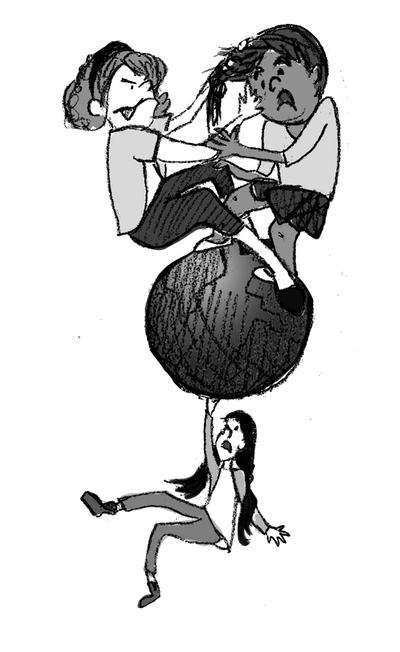
My 2 best friends want to wipe each other off the face of the Earth! I hate it! It’s tearing me apart! Help! Me! When two people you care about are not getting along, it can feel like you’re in being pulled in two directions at once. I’m guessing that once upon a time, these two girls may have been close friends, but then… what happened?? A misunderstanding? A competition that led to jealousy? An unkind remark that was meant as “a joke” but not taken that way? There are so many ways a friendship can break apart. Since you care about them and would love to see them getting along, try negotiating a “peace treaty.”
Call a meeting with you and your 2 friends. Tell them how their fighting is “tearing you apart.” Tell them you want to help them get to the bottom of this feud. Then give Friend A an opportunity to speak her mind. While she’s talking, you and Friend B only get to LISTEN. No one interrupts. No one corrects. Just listen. When Friend A is done talking, it is her turn to LISTEN while Friend B speaks her mind. Again, without anyone interrupting. After Friend A and Friend B have both had their say, it is your turn. You might say: “Friend A, this is what I heard you say about why you are angry with Friend B. Friend B, this is what I heard you say about why you are angry with Friend A. What could we each do, moving forward, to help our friendship?” Good luck. I hope this helps!
Somebody is making fun of somebody else’s reading level. What should I do? You know this isn’t OK, and I’m very proud of you for putting your values into this question. It tells me that you are a person who believes that everyone should be treated with respect. Whether this is happening to you or you are watching someone else being made fun of, I encourage you to stand up to the person who is doing the teasing and speak up. Sometimes people get away with teasing because they don’t think it’s “a big deal” or they somehow think it’s “fun” or “funny.” Teasing can be very hurtful and the best way I know to have less of it, is to tell the teasers “That’s not ok.” Go for it!
I have two classmates that really annoy me sometimes. What should I do? You always have options, but being rude is never one of them! You could try to spend less time with each of these classmates. Or, the next time you feel annoyed by their behavior, you can privately, calmly and politely talk to them about it. But you know what I think might be the most interesting thing for you to do? Ask yourself a couple of questions: “Why is that behavior so ANNOYING to me?” Think about the answer. It may not be as simple as you first imagine. Another question you might ask yourself is this one: “Why might s/he be doing this? To be liked? To be respected? To be thought of as cool?” If you look at “why” people act the way they do, you might start to understand them a little better. For example, have you ever done something just to get people to notice you and to like you? We all have. So if these classmates are doing stuff just to get people to like them, instead of feeling “annoyed” by their behavior, you might actually start to understand them better and feel some compassion. (Much nicer than annoyance!)
I have a friend and he is sometimes nice to me and sometimes not. Should I be friends with him? We all have times when we’re in a bad mood and not so nice to the people around us. It’s not ok to take out your bad mood on someone else, but it happens. Hopefully not too often! But even when it does happen, after the bad mood passes, it’s a good thing for friends to talk about what happened. Have you ever told your friend how you feel when he isn’t nice to you? If you have told him and his behavior still hasn’t changed, you might want to ‘take a vacation’ from this friendship. Spend less time with him and more time with people who are nice to you. If you haven’t yet told your friend about this, talk to him. He’s not a mind-reader!
One of my friends is way too bossy! Also, if she does not get her way she is very mean to me! I sure hope you’re not suffering silently! Because, like I said in my answer to the last question: Friends aren’t mind-readers. When people aren’t treating us well, we have to let them know. Please stand up and speak up for yourself. Might your friend get angry when you tell her how you feel? Yes, there’s a chance she will! But the only way things are going to change in this friendship is if you show that you know how to be a real friend to yourself!
Why do friends make up a club and don’t invite you in? I think you probably already know the answer, but I’ll tell you any way: They didn’t invite you in because they don’t want to spend as much time with you as you want to spend with them. I understand it hurts your feelings to be left-out of their club, but you might think about it this way: “Real friends like to be with me as much as I like to be with them. If these friends aren’t inviting me to join their club, maybe they aren’t as good friends as I thought. Hmm… instead of feeling sorry for myself about their little club, maybe I should look around and try to make a new friend.”
How do you know if a so-called friend is a REAL friend? You know if you’ve got a REAL friend (vs. the Other Kind) by the way you feel when you are with that person. Do you feel safe? Do you feel respected? Do you feel totally accepted for who you are without any pressure to be someone you’re not just to get that person to like you more? A REAL friend is there for you, when you need cheering up and when you want to share some exciting news. I wrote a whole book about Real Friends vs. the Other Kind. See if it’s in your school library.
There is a girl in my class that is nice to everyone else except me. I really like her, but when I join a game with her in it, she says she is not playing and then she runs away! Also, I think she can get really tough when I want to talk to her. What should I do? Before I answer your question, I’ve got one I need to ask you: Why would you want to be friends with someone who is not nice to you?? You ask “What should I do?” Well, because I know you deserve to be treated with respect, I’d say, for the time being, you should stop trying to get this girl to be nice to you. For whatever reason, she’s not ready to do that. Why would you continue knocking on her door when she refuses to open it with a smile and welcome you inside? Instead, I suggest you go on a New Friend Search. I’m sure you will find the kind of friend you deserve. Good luck!
My friend is friends with a very mean and rude girl and she’s stealing my friend away from me. What should I do? Someone can “steal” a pencil or a book, but I don’t really believe anyone can “steal” a friend away from you. If your friend chooses to spend more of her time with this other girl then that’s your friend’s choice. I understand you don’t like it because you miss the special close one-on-one relationship you two used to have, but she has the freedom to spend time with other people. Talk to her about it. See if there is a way you can schedule playtime just with her. And while she’s busy, think about what fun things you can be doing, either on your own or with other friends.
My bff hates me because she wanted to do something really bad and I said no because I knew she was gonna get caught. So she did this thing and she’s not my friend ’cause I said no. But she got away with it, so I’m totally clueless. I’m very proud of you for not letting your friend pressure you into doing something that you knew wasn’t OK. That tells me that you know how to make healthy choices, even when friends are pushing and pulling you in other directions. I think your bff is angry because you didn’t go along with her idea. She probably knows that you were right in your decision but she can’t yet admit that she was wrong. So instead, she’s pushing you away with her anger. Give her some time to cool off. Hopefully, you two will come back together. But here’s a word of warning: if she has any more idea to do things that don’t feel right to you, think about whether she shares your values. It can hard to have a real lasting friendship with someone who doesn’t share your values.
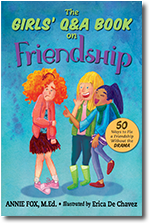
UPDATE October 3, 2014: The Girls Q&A Book on Friendship: 50 Ways to Fix a Friendship Without the DRAMA is now available in print and on Kindle (the ebook can be read on any device, your mobile phone, tablet, or computer with the free Kindle reader app). Visit GirlsQandA.com for an excerpt, reviews, and to order your copy.
— Older Posts »
| |















 Facebook
 Twitter
