|
|
March 19, 2012
This is Part 2 of a 5-part series based on students’ questions I received while visiting a school in St. Louis in early March. Missed the 1st part (Friendship issues from the 2nd grade)? Here it is. And please check back next week for Questions from the 4th grade.
What should I do if someone is being mean to me and not to anybody else? Not everyone knows when they’re being ‘mean.’ Sometimes people feel so angry or jealous they do and say things without thinking about other people’s feelings. That’s why it’s important for you to speak up whenever you are being treated disrespectfully. Even if you’re not the only one who’s being treated this way, you should still speak up. Show that you have respect for yourself. If his/her behavior toward you doesn’t change for the better, talk to your teacher. With the teacher’s help, you and this other person may be able to make the peace.
My bff twin bosses me. She wants to make me believe in something I know isn’t real. It’s very annoying. What should I do? Sometimes people who have an active imagination just automatically try to get other people to see things their way in a game or on the playground. Your bff may not be trying to “boss” you around. She may just be trying to get you to play a game in a certain way. If you’re not having fun always doing things her way, then you should tell her. And if that doesn’t change anything, it might be a good idea to spend time with friends who you feel more comfortable with.
One of my friends (A) called my other friend (B) “smart” and not me. Friend A had a playdate with Friend B (and not me) and the next day Friend A only talked about Friend B’s pet. It made me sad. What should I do? It can hurt if you feel like a friend you were once very close to is starting to like other people more than she likes you. That’s what the emotion jealousy is about. You may feel like you are in competition and that only one person can win. But that’s not necessarily the truth. I suggest you talk to Friend A and let her know how you’ve been feeling. Maybe she doesn’t even know! When we let our friends know how we feel, we can often work things out. And when we open our hearts, we can include more people in our friendship circle.
What if nobody want to play with me? I’m sorry you’re feeling like this. That tells me some kids in your class may not have been as friendly as they could be. I’m also thinking that there are probably some kids in your class who don’t realize that you are looking for friends. You should definitely talk to your teacher about this. Maybe he or she can give you some ideas for making new friends. Also, if your teacher knows that you are feeling lonely at school, s/he can do something about it by talking with the whole class about what it means to be a real friend and to make everyone feel welcome. I hope this helps.
Why does my friend get her way, usually? If the same person in a friendship seems to get her way most of the time, it may be because the other person has allowed that to happen. For example, if I always say, “Let’s go on the swings” and you always agree (even if you’re bored with the swings) then I’ll think you love the swings as much as I do. But that’s not the truth! Suppose you’d much rather climb on the climbing structure. If you never say what you want, how am I supposed to know? The next time your friend has a suggestion that you don’t agree with, you might say something like this, “I don’t feel like doing that today. How about if we do your idea tomorrow and my idea today?” That’s called compromise… and it is a good way to keep a friendship healthy and strong.
What do I do if two people go against one of my friends? I’m not exactly sure what you mean when you say “go against one of my friends” but it doesn’t sound too friendly. And it sounds like you feel you ought to do something to help your friend. Whenever you get that feeling that “something isn’t fair here,” pay attention to it. You have the power to stand up for anyone who is being treated unfairly. I hope you do that! That’s part of what it means to be a real friend. Also, it will make you feel proud of yourself for doing the right thing.
What do I do when someone is playing a game and doesn’t include me? Sometimes a game is set and it doesn’t work to let more people into it. (Like 9 people on a baseball team. That’s all that can play at one time.) If that’s the game then the people who don’t want to include you are not trying to be hurtful. But sometimes people who want to leave you out may be trying to hurt your feelings. If it feels like someone (or a group of people) are always trying to exclude you, then you have some choices: a) you can talk with them about it b) you can talk with a teacher about it c) you can look for other people to play with or d) you can feel sorry for yourself and waste a lot of your play time being in a bad mood (I would not recommend choice ‘d’). But you are not powerless. So think about what you’re trying to do and get some help, if you need it.
What should I do if my two friends say that I said something but I did not and I said I did not. It can be really frustrating when you are telling the truth and people do not believe you! I’m not really sure what you can ‘do’. No one has control over what other people say or think or believe. You can continue to tell them “I did not say that.” but there is no guarantee that they will believe you. Real friends tell each other the truth and real friends listen to each other. When they make a mistake, they apologize. Real friends treat each other with respect. It sounds like these friends are not being respectful to you. If they continue in this way, it is going to be hard for you to relax and feel comfortable around them. I don’t know why they refuse to believe you, but if it continues, I suggest you take a break from this friendship and if they ask “Why?” tell them “I need a friend who will believe me when I tell them the truth.”
Nobody wants to sit with me at lunch, not even my best friend. What should I do? Everyone deserves to have a friend to sit with at lunch! If your best friend doesn’t want to sit with, I’m wondering what makes this person your “best friend”? This doesn’t sound like “best friend” behavior. It also sounds like you don’t know why your friend is treating you this way. I think you should ask him/her “Why don’t you want to sit with me?” See if you can get to the bottom of this, on your own or with help from an adult.
What should I do when my friend does not treat me nice when I treat them nice? A friendship is a two-way street. Niceness and respect and all the other good things in friendship have to flow in both directions. When only one person is being nice and the other person isn’t, well, that friendship is in trouble! The best thing you can do is to be a real friend to yourself. What do I mean by that? I mean, talk to this friend and let him/her know that you don’t like the way s/he has been treating you. (Give an example of some of the ‘not nice’ behavior you are talking about). You might also say, “When you act this way, it feels like you aren’t my friend. So what’s going on?” Then close your mouth and LISTEN to what your friend has to say. Talking about friendship problems doesn’t always fix things, but it’s a very good place to start!
What should I do if somebody is pushing me around? The next time it happens you should hold up your hand, look the person straight in the eye and say, “Stop! Don’t do that.” If they don’t stop, talk to your teacher. It’s the responsibility of the school to make sure that every student is treated with respect. If this pushing around stuff continues, tell your parents and ask them for help. It’s your parents’ responsibility to make sure that you are safe. They can’t do their job if they don’t know what’s going on. Talk to them. They can help.

March 12, 2012
A few weeks ago, I visited a school in St. Louis where the word “respect” is much more than a poster on the wall. (I love it when that’s the case!) Walking through the front door I sensed that social and emotional learning at this school was the real deal. Throughout the day, I presented five separate grade-specific sessions. And let me tell you, those 2nd – 6th graders were some of the most engaged students I’ve met in the dozen or so years I’ve been doing this stuff. The kids eagerly took my tools for dealing with friendship issues and in return, gave me their hand-written, anonymous questions to take home and ponder. I promised I’d address each one, right here, in my blog, so they could log on, with their parents, and have a serious conversation about what’s going on in their lives and what it means to be a real friend vs. the other kind.
Because I also teach the importance of keeping agreements, I’m starting today with part 1 of a 5 part series in which I will respectfully answer each of the thoughtful questions I received from those St. Louis students. See Part 2 Friendship Issues from the 3rd grade. and Part 3: Friendship Issues from the 4th grade
(NOTE: If you are one of the students who wrote a question and you don’t find yours in your grade’s blog post, I may have put it in the wrong place by mistake. Look for it in another blog in this series.)
My best bud lost to me in a state capital contest and hasn’t liked me since. What should I do?
Sometimes it’s hard to lose. Maybe once or twice you have felt angry at someone who beat you at a game. I know I have! It sounds like your friend may be feeling that way since you won the contest. I suggest you go to your friend, maybe at recess or lunch. Smile, and say, “Let’s be friends again” then invite your friend to play or to sit with you. See what happens!
What do I do if someone is only trying to play with my friend, not me? And I tell her “May I play with my friend?” and she says ‘No.” It sounds like you and this person are having a little tug-of-war! But instead of pulling on either end of a rope, you are pulling on your friend! This person does not ‘own’ your friend, but neither do you. If you and this person and your friend can not play well all together, then suggest you talk to your friend and set up a time to play with just her. You may have to take turns playing with her. And during the time when your friend is playing with the other person, you find someone else to play with.
What can I do if someone makes someone be a certain thing in a game? Make believe games are a lot of fun, but it’s not so much fun if one person gets a little bossy and tries to “make” other people be certain things they don’t want to be. Of course, if you’ve never told the person that you aren’t comfortable with all of his/her ideas, then it’s time to speak up! The next time this happens in a game, you might say, “No. I don’t want to be that. Instead, I’m going to be______.” Try it and good luck!
How do I find out if people like me, cause I want to be nice to them? I think you have this “being nice” stuff a little bit backwards. We aren’t “nice” to people just because they like us and we want to reward them! We should be nice to people is because we can be! Also it feels good to be nice to people and makes the world a better place! And you know something else? When you are nice to people, they are more likely to want to be your friend because you’ve shown that you are a kind and friendly person. So don’t worry about whether certain people like you. Just be nice and see what happens!
What should I do if somebody retaliates for something you did not do? You do your best to tell them that you didn’t do the thing that they’re blaming you for. If they won’t listen or won’t believe you, you should talk to an adult about this. Hopefully a parent or teacher can help you and this other person get to the bottom of this misunderstanding.
What should I do if someone tattles on my friend? You don’t need to “do” anything except to take yourself out of the middle of this one. It really doesn’t have anything to do with you. If your friend did something that wasn’t OK and got in trouble for it, then your friend is the one that needs to set things right. As for the person who “tattled”, well, honestly, I’m not so sure what that word means. If it means, “Someone was mean to me and I told the teacher about it.” I don’t think that’s a bad thing. I think that is the right thing to do!
What if somebody pushes me into another person? If it was on purpose (and not accident) then you apologize to the person who got bumped and you talk to the person who pushed you. You might say, “If you’re angry about something, let’s talk. But don’t push me.”
What if somebody promises to sit with me at lunch but doesn’t? Sometimes people forget their promises and they need to be reminded. And sometimes people make promises when they really don’t mean to keep them. If this person is a real friend, then set up another time to sit together at lunch. If this person never seems to want to sit with you at lunch, I suggest you find some other people who DO want to sit with you!
What should I do when people give me the silent treatment because they don’t want to be my friend? I know that it hurts when people you want to be friends with act like they don’t want you as a friend. You can’t force someone to be your friend, but you can always remind yourself that you deserve to be treated with respect. Giving someone the silent treatment is disrespectful. If someone does this to you, I suggest you do two things 1) tell them “STOP. You’re being cruel.” and 2) look around you and find some kinder people to hang out with.
What should I do if no one likes me? I wonder how you can be so sure that “no one” likes you. I’m sure that’s not right! But I can tell that you believe it and it’s making you feel sad and lonely. You need at least one good friend you can count on. And it sounds like you need some help finding that friend. Please talk to your parents about these feelings and talk to your teacher. Tell them “I need a friend.” and that will be the start of something better.
My friend says “I can do this and you don’t have the powers to.” What should I do? Invent some super powers of your own! It all starts with your wonderfully powerful imagination. Don’t let anyone tell you what you can’t do!
March 5, 2012
by Scott Morgan
Scott Morgan is a board certified Austin divorce attorney who regularly blogs on the subject of divorce and family law. Check out his blog.
Everyone’s heard horror stories of divorced parents using their children to get back at their ex. Loving parents take pains to avoid this kind of behavior, even if the thought of their former spouse makes them teeth-grittingly furious. Here are some tips for successfully co-parenting while avoiding behaviors that will ultimately harm your children:
- Tell the Kids Sooner Rather Than Later
Children should be told about the impending divorce or separation as soon as parents know there is no hope for reconciliation. During this conversation it is important parents present a united front and avoid blaming each other, regardless of how tempting this may be. Children need to know that the divorce is in no way their fault. Don’t assume they know it. Tell them! If either parent finds this conversation too daunting, they should seek the services of a therapist, at this juncture and at any point during or after the divorce.
I had a client who had a very amicable divorce with her husband. They mutually decided they just didn’t want to be married to each other. Things were so mutual that they did not separate and neither one moved out until the divorce was final. Both parties were good parents and loved their 5 and 6 year old kids very much. Unfortunately, they could not bring themselves to tell the kids until two days before they separated and the wife moved out with the kids and they put the house on the market. As you can imagine, the children did not take it well and were very upset. They eventually adapted to the new situation as kids usually do, but if the parents had been more upfront about what was happening they could have reduced the kids’ trauma..
- Don’t Use the Children as Pawns.
In the worst of cases, one parent may fight for custody solely to hurt their spouse. They might even threaten to have one or all of the children appear in front of the judge. This temptation should be avoided at all costs. Children can be permanently harmed by their direct involvement in their parent’s divorce.
One of my clients, a stay-at-home mom who did everything for the kids, had an affair and was leaving her husband. The husband was a likeable enough guy, but a workaholic and not a particularly involved dad. Understandably, he was very hurt by the affair. What was not so understandable was his turning the divorce into a lengthy, ugly, full-blown custody case that was purely motivated by revenge. Ultimately the case settled with wife getting primary custody, but the custody dispute was completely unnecessary and created a major rift between them that permanently damaged their co-parenting relationship..
In some states joint custody has to be agreed upon by both parents while in others it’s a quasi default position. Some child psychologists disapprove of joint custody where visitation schedules alternate weeks with each parent. These clinicians say that the frequent back and forth can leave the child with feelings of instability. Others say that what’s most important is that both parents fully engaged as parents and be very involved with their children’s lives and that alternating week visitation arrangements are a good way to facilitate this.
From my experience, the most important issue in post-divorce parenting, regardless of the specifics of the visitation arrangement, is that both parents put their children’s best interest at the forefront of their thoughts and sincerely work together to raise their children. While this can be challenging, every parent should try their best to accomplish it.
- Don’t Ask the Children Who They Want to Live With
A perceptive parent can tell what a child’s preferences are and should not need to ask them this question. Neither parent should attempt to bribe or guilt trip their children in order to manipulate them.
While it sometimes makes sense to ask teenagers about their wishes, asking a younger child what they want is an exercise in futility. I had a custody case involving an eight year old boy. Both parents wanted and sought primary custody and they both believed that the child wanted to live with them. Why? Because each separately asked the child who he wanted to live with. The boy answered to each “I want to live with you.” It wasn’t that he was trying to confuse them, he was just incapable of making such a significant choice.
- Visitation Must Continue Even if Child Support Doesn’t
Court ordered child support must be paid as ordered. Visitation with the children must also be allowed as ordered. However, the right of visitation and the obligation to pay child support have nothing to do with each other. Children shouldn’t feel that a visit from the other parent is contingent upon their ability to pay.
I once did a consultation with a mom who was inquiring about pursuing her ex over his child support delinquency. She mentioned how she’d refused to let him see the kids when he stopped paying child support. As I explained that she was just as much at risk of a contempt of court finding as her ex was. I advised her to immediately resume allowing her ex to see the kids. In the eyes of the court they are completely separate issues.
While effectively co-parenting your children can be one of the life’s hardest challenges, especially if you have deep-seated resentment towards your ex, you owe it to your children to do your absolute best. That will give them their best chance for a happy and healthy childhood.
February 20, 2012
By Jayne Clare
Jayne Clare, Special Education teacher, and Anne Rachel, artist and Early Childhood educator, co-founded Teachers With Apps. These two lifelong educators are committed to “… helping parents, grandparents, teachers, administrators and anyone else, wade through the vast number of educational apps being introduced on a daily basis. Remember, not all educational apps are created equal.” A few weeks ago, at Jayne’s invitation, I visited with her 5th graders via Skype. First time I’d done it that way and it was a total blast. Here’s Jayne’s report from her side of the giant screen.
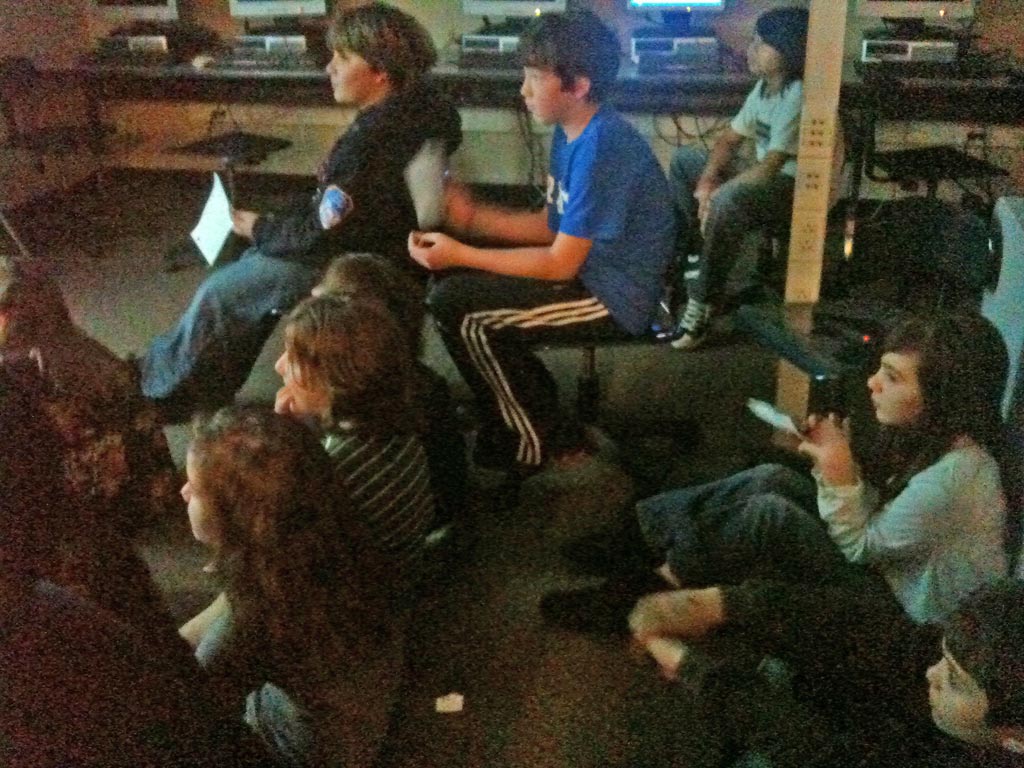
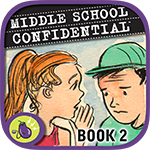
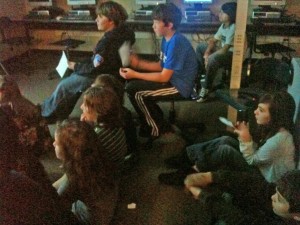 Wow! That's really her! Electric Eggplant just recently released Middle School Confidential Book 2: Real Friends vs. the Other Kind to the app store. I’m a new teacher to this age group; twenty plus years in an elementary school simply can not prepare you for the hormones raging in the intermediate school setting! So glad that I came across this awesome resource when I did, February with 5th graders is an eye-opener! I’d been sharing MSC with small groups of tween students and using the Smart Board with larger groups by hooking the iPad up with a cable. This was part of the field-testing involved prior to writing a review for Teachers With Apps (TWA). Although I had worked with several grade levels, it quickly became obvious that our 5th grade students were really benefiting from spending time with this app. The experience helped the students with their growing pains by opening up dialogue that may not have taken place otherwise.
It started out innocently enough, I emailed Annie with some positive feedback after field-testing the app and we exchanged a few emails. David Fox, her other half, asked, “What do you think of the idea of doing a Skype call with Annie during class time? The students can interact with her, ask questions, etc…” Of course my answer was an emphatic YES, but being a public school teacher meant that I would need permission from administration. That was easy to obtain, so back to Annie to set a Skype session for Friday at 1:00pm EST.
As the week progressed, my students continued to become more familiar with MSC characters and had even picked their favorites. Friday arrived! For morning work, the kids all wrote out questions and/or comments to share later in the day. I scrambled to get the technology in place for our Q & A with Annie. Nervously, as one always is when using technology for a lesson, I practiced a Skype call with my TWA partner and got the lay of the land set up for the students. They were going to be tighter than a can of sardines, if they were all going to be seen. I wondered how they would sit so closely without some kind of problem erupting.
One o’clock arrived and somehow all the kids managed to squeeze into the allotted space as they waited anxiously to meet the author. The computer rang and there she was, Annie Fox, bigger than life on the Smart Board! The first question was asked and in the time that it took to respond, the room became silent. You could have heard a pin drop. One by one the students took turns asking questions and Annie answered with clear, concise, commonsense answers. She shared some of her own insecurities as a child and you could still hear a pin drop. More questions were asked and answered.
The woman on the screen, who so gently and so naturally took in all their woes and comforted them with sound, soothing advice, mesmerized the group. Out of all the responses given, one resonated with me; she told our most mature student that she should take a vacation from that friend, which was such simple yet profound advice. As our session came to a close it was evident it had gone extraordinarily well. The kids sat through the first bell of 9th period as they said their goodbyes, only to find out that Annie had grown up and gone to school not far from where we are in the “Hamptons”! There were hoots of “Go, Long Island – Go New York!” as the students filed out of the classroom.
“Awesome. That was awesome,” my co-teacher Maggie exclaimed and yes, I agreed, it certainly was!
Thank you Annie, what day works for you next month?
UPDATE: Through the end of March, I’ll do a free Skype classroom visit, to any school that purchases Middle School Confidential books and/or apps.
— Older Posts »
| |














 Facebook
 Twitter
