|
|
May 13, 2015
by Amy Williams
Amy Williams is a journalist based in Southern California. Mom of two, she uses her parenting experience to help other parents raise their children to be the best that they can be. You can follow Amy on Twitter and Facebook.
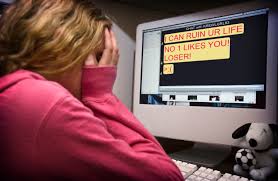 Why don’t they leave me alone?! According to Chinese tradition 2015 is the year of the Sheep. I hope it’s better than last year, which I called The Year Of The Bully.
At the start of 6th grade our son had a physical altercation at football practice. The harassment continued at school, extracurricular events, and on Social Media. We didn’t know because our son didn’t let us in on it, a typical response from tweens and teens who are being targeted.
He’d come home from practice upset, shirt torn, and occasionally with missing his cleats. At first we chalked it up to the rough nature of the game and forgetfulness. But other things indicated something was wrong. Some of the puzzle pieces we observed:
- Our son frequently complained about stomach aches and found it difficult to sleep at night.
- He was visibly upset and often would erupt in anger toward his younger sibling for no reason.
- We received emails from his teacher’s about his behavior and falling grades.
- He didn’t ask for friends to come over or to meet up at the movies.
- He suddenly stopped wanting to play on his tablet, the family computer, or use his online account with his gaming system.
- He would cry and refuse to go to Scouting functions or Church activities.
Looking back I can’t believe how blind we were. He was clearly exhibiting signs of being bullied at school and online.
One day I picked him up after football practice. Waiting by the field, I watched our son interact with his teammates. He walked barefoot to the van, desperately trying to hold back his tears. Finally, he let it all out. We felt terrible that we had failed to keep our child safe, but now, we could help and we got right to it.
Our first action was to alert his teachers, bus drivers, and school administrators. It was comforting to know there were extra eyes and ears to monitor the situation. I had a wonderful conversation with the principal who changed the seating chart for the bus ride, changed how the children lined up for lunch, and added a few more sessions about bullying into their counseling rotation. She was trying to educate students on the differences between positive ways to interact vs. aggressive behaviors.
Because 1 in 3 children are victims of cyberbullying and over half don’t report it to an adult, we began an open dialogue with our son. To protect himself, he changed his profile and names on Social Media and gaming sites. During the beginning of our journey, we opened and read all messages together and limited online contacts to friends and family only. We began to actively monitor his Internet and cell phone activity, using a convenient app that allows us to view all his accounts in one place. We also started interacting online with our son so the kids who were targeting him couldn’t miss our presence. Finally, we made a rule that digital technology would only be used in our common living area, no more kids online in isolation (exactly what harassers hope for.)
With a little effort and a lot of emotional coaching, our son is doing very well. He enjoys school again and now happily interacts with his friends online. His former harassers have improved their behavior, too. They probably didn’t understand they were crossing a line. All in all, with this situation behind us, I’d like to believe this experience will foster my son’s empathy and emotional fortitude to handle adversity.
Goodbye, Year of the Bully. Hello, Year of the Sheep. May it be lucky and prosperous for our family and yours.

April 23, 2015
 A Good Use of Power In our 40 years together, David and I have read many books. Add another hundred or so books on tape we’ve consumed on road trips. Yep, we’re addicted to good stories. So it wasn’t too weird when, after a business trip to Florida and a side trip to Universal’s Wizarding World, we decided to re-read all the Harry Potter books… aloud… to each other.
Starting in mid-December, I’d read a couple chapters over breakfast each morning. At dinner, with wine and candlelight, I’d read another chapter or so. If we were driving for more than 20 minutes in any direction, I’d read aloud in the car. (Yes, I can do that without barfing. Lucky me.) At the end of each day we’d watch the film adaptation of the current book, making sure to stop when we got to a new part (i.e., a section of film we hadn’t yet read.)
To date we’ve completed six books and six films. (When we get into something we really get into it.) We’re now half-way through Book 7.
Ever since the kids of Hogwarts took their education into their own hands, I’ve been thinking about the Dark Arts as it relates to the dark side of humanity. While we rarely hear about jinxes or debilitating spells, we’re plenty aware of public humiliation and shaming in social media. Character assasination is a curse, high on the list of Dark Arts. So how do we defend ourselves against the real and present danger of social garbage? How do we teach our kids to defend themselves, online and off, from the hostility of their peers? Where is Harry Potter when we need him?
When I think about what it means to defend oneself, I picture someone standing up for their rights or the rights of others and actively fighting back against the vitriol. But there is inherent danger when one uses vitriol to fight vitriol. The weapon we use has the power to infect us and make us more and more like the perpetrators we seek to vanquish. We can so easily become the enemy. Doing the right thing in a good way isn’t easy.
How do you help your children defend themselves against the prevailing Culture of Cruelty? How do you teach them not to succumb to its ways? Post here and let’s get into it. You can also follow my tweets at @Annie_Fox and @GirlDramaChat. Every Friday you can join the conversation as I host #girldramachat, a weekly Twitter chat (11AM PST) to help parents/teachers/counselors support girls thru friendship drama w/compassion, respect & social courage.
April 29, 2014
There have always been kids who seem to get pleasure and a power-high from bugging other kids. Maybe there always will be. Thankfully, adults are getting wise to the fact that “Kids will be kids” is no excuse for peer-harassment. Over the past decade, we have learned some heart-breaking lessons about the tragic consequences of unstopped harassment. Our education has come through the irreparable damange caused to targeted kids and their families. These days, at least on paper, parents and educators are much less tolerant of “mean kid” behavior than we have been in the past.
Of course, we’re talking about bullying (online and off) but I’ve purposely not yet used the word because it’s overused to the point of being meaningless.
Let’s get one thing straight, the definition of bullying is not: Everything that other people do that you don’t like. A rude, one-time comment is not bullying. A friend telling you that she doesn’t want to be your friend any more is not bullying. When everything is called bullying, kids miss the point and nothing changes for the good. So let’s be clear. Peer harassment is a) ongoing b) unwanted and c) typically involves a power disparity between the two people. For example, boss to employee, coach to player, parent to child, older sibling to younger, “popular” kid to less popular kid.
In my most recent 3 minute Vidoyen video I answered the question: How can parents and educators do a better job reducing bullying?
 How to stop it? I’ve got answers
October 16, 2013
 Rebecca Sedwick (2001-2013) (See UPDATES below) Last month I wrote about Rebecca Sedwick, a 12 year old Florida girl who jumped to her death from the tower of an abandoned cement factory. Rebecca apparently couldn’t imagine another way to end the online harassment she’d suffered for months.
I desperately want to believe that adults who knew Rebecca would have supported her and effectively stopped her tormentors, if only they had known. But she didn’t feel supported. And the tormentors weren’t stopped. Was it because not one adult knew anything about what was going on all that time? I find it hard to imagine that one child in so much pain and a group of other children with so much hate-fueled energy could escape the notice of all the adults around them. But I guess it’s possible. We’re all so busy and kids are pretty good at hiding stuff they don’t want us to know about. But still…
BullyPolice.org, a well-respected watchdog organization that advocates for bullied children and reports on states’ anti-bullying laws, gives Florida an A++ rating. Great work, Florida. Laws change behavior. And yet, at least in this case, the law didn’t deter a group of children from maliciously harassing another child. I could be wrong, but because the cyberbullying took place in public over a period of months, I assume some adults knew who was involved.
According to the AP, Florida’s newly amended cyberbullying law “leaves punishment up to the school, but law enforcement can seek criminal charges.” I don’t know if any kids were disciplined by the school or their parents, but on Monday two girls, a 12 and a 14 year old, were arrested and charged with felony aggravated stalking. The 12 year old was once Rebecca’s friend. The 14 year old allegedly posted this on Facebook last Saturday: “Yes ik [I know] I bullied REBECCA nd she killed her self but IDGAF [I don’t give a (expletive)]”
This toxic social garage stinks to high heaven. It’s now so typical it’s not really even news any more. In case you haven’t guessed, I’m disheartened. Which means I’m at risk for becoming desensitized to this cruelty. But I’m not going to let that happen. I can’t.
So I read some of the comments posted about this case. Many folks indicated that the girls were “just mean.” Meaning what? That cruelty is their nature and it can’t be changed, so why bother? These are kids, dammit. We are the adults. They learn from us. If we’ve taught them not to “give a bleep” about anyone but themselves, then we’ve got to teach them something else. Otherwise we’re all bleeped.
Check out Day 17 of the Kindness and Respect Challenge
UPDATE: April 8, 2014 AP reports on Rebecca Sedwick’s case file.
UPDATE: November 21, 2013 Charges dropped against the girls in Rebecca Sedwick bullying case
| |












 Facebook
 Twitter
