|
|
January 9, 2017
 “When the powerful use their position to bully others, we all lose.” At Sunday night’s Golden Globes, actress Meryl Streep was honored with the Cecil B. DeMille Award for lifetime achievement. Her acceptance speech honored and encouraged all of us who try to be mindful of the dignity and respect we owe our fellow humans. If you haven’t yet watched that speech, it’s only about 6 minutes. Well worth your time. The crux of it: Use your power for good.
Without mentioning the President-elect by name, Ms. Streep said,
“…when the person asking to sit in the most respected seat in our country imitated a disabled reporter, someone he outranked in privilege, power, and the capacity to fight back. It kind of broke my heart when I saw it. I still can’t get it out of my head because it wasn’t in a movie. It was real life.
And this instinct to humiliate, when it’s modeled by someone in the public platform, by someone powerful, it filters down into everybody’s life, because it kind of gives permission for other people to do the same thing. Disrespect invites disrespect. Violence incites violence. When the powerful use their position to bully others, we all lose.”
This chapter we’ve entered isn’t about politics. Though some argue that everything is political. Perhaps. But most of us parents don’t think about politics as we raise our children. We think about the basics of the job at hand. Food. Shelter. Economic and emotional security. Education. And if we are fortunate enough to have those boxes checked, we can begin to think about the kind of people we want our children to grow up to be. We think about how they will treat others. What kind of friends and partners they will become. We think (and often worry) about how others will treat our children.
We try to be positive role models for our children and for all children. In this time and place where hate speech and duplicity are becoming normalized, we must redouble our efforts. When we see disrespectful behavior we must speak out against it. We must teach our children to speak out against it. To do otherwise encourages more disrespect and hate and violence. Make no mistake, polite silence is not an option. It never was. Neither is exasperated head-shaking. If we are to be teachers worthy of our children, committed to creating a saner, safer world for them, then we must actively push back against the growing normalization of hate. In the absence of moral leadership, each of us must lead.

November 7, 2015
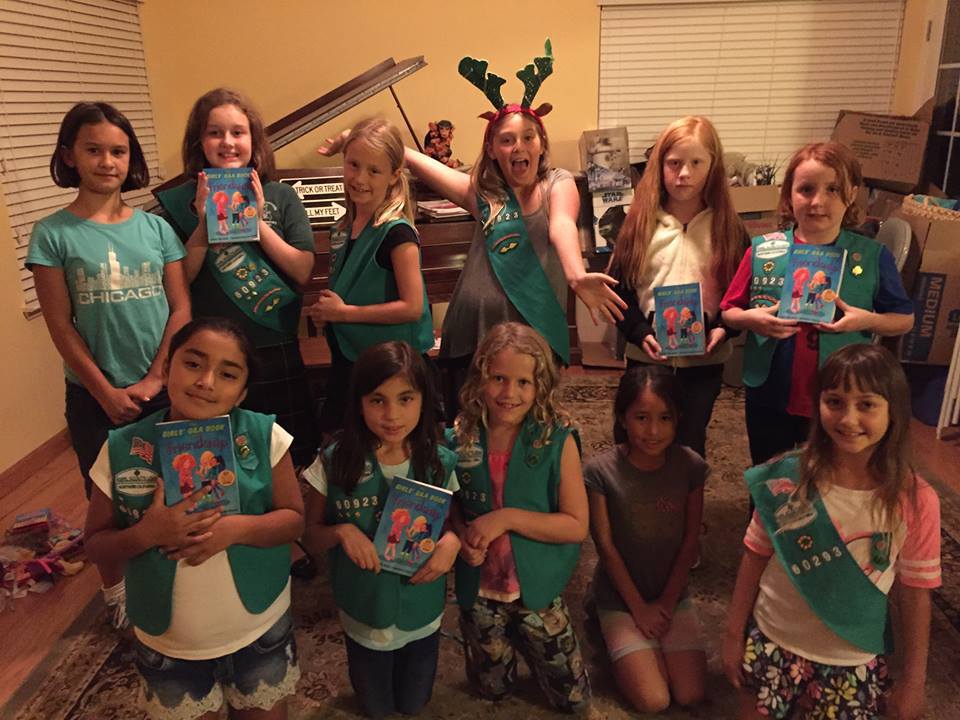
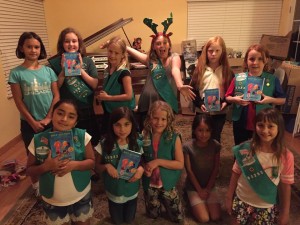 We’ve got the tools and we’re brave enough to use ’em! Last month I began partnering with the Girl Scouts of Northern California by presenting my Girls Friendship without the Drama Workshops. In the first hour I teach girls to navigate all kinds of sticky peer conflicts while the moms (and the few cool dads who’ve shown up) sit back, listen and observe. During the second hour the girls skedaddle into another room where they engage in more (supervised) friendship-building skills while the parents and I circle the wagons and get to the heart of what girls need from those of us who love them.
To date I’ve done nine of these workshops with another seven scheduled. Girls can’t wait to start using what they’ve learned. Moms are reminded how painful it can be feel “replaced” by a friend. Dads are stunned at how hard it is for girls to tell a friend, “Stop. I don’t like that.” Parents are thrilled to have new insight, language, and context to help their daughters do a better job navigating friendships.
Here are some tips to help you help your daughters and sons resolve the inevitable issues that come up between our kids and their peers.
Dealing with Friendship Challenges
- Calm Down. No matter what awful thing some child has done to your daughter or son, calming down first makes it easier to get through the upset. So take some slow deep breaths and encourage your child to do the same.
- Show that you get it. Acknowledge that it hurts when a friend turns against you. Reflect back what you hear, “You sound really hurt, angry, and confused.” Share one of your own “hurt by a friend” stories. Share what you learned and how you used it to become a more thoughtful person and a better friend. This models empathy and reassures your child that (s)he will survive.
- What Can/Can’t You Control? Tell your child, “You can’t control a friend’s behavior or feelings, but you can get a handle on your own.” When we try to control things we can’t control, it stresses us out and makes us feel powerless. Don’t let your kid go there!
- You’ve got options! Even after a blow-up with a bff, your child is far from powerless. She always has options. For example, your child might:
- Never talk to that friend again
- Get back at her by spreading gossip
- Suppress the hurt and act like it didn’t bother you
- Find new friends
Brainstorming should be open-ended. Encourage your child to freely explore ideas without your judging them. They’re just ideas and this is a clearing process. Even the worst, knee-jerk options offer great (and totally safe) learning opportunities. In addition, you’ll give your child a gift by talking about all of this. When s/he doesn’t have to worry about your rushing in to “fix” the problem, your child’s thinking process will be accelerated. Hopefully, she’ll move closer to the time when she no longer accepts disrespectful behavior from anyone, including herself!
At the end of the process your child may decide to take a vacation from the drama or to find the EXIT out of the friendship. That’s her choice. But just because she’s finished, doesn’t mean she has the right to make life unhappy for an ex-friend. I put it is this way: You have the right to choose your friends, but it’s NEVER okay to be cruel or disrespectful. Keep your distance if you choose, but always treat others the way you want to be treated. Old rule. Still applies.
May 13, 2015
by Amy Williams
Amy Williams is a journalist based in Southern California. Mom of two, she uses her parenting experience to help other parents raise their children to be the best that they can be. You can follow Amy on Twitter and Facebook.
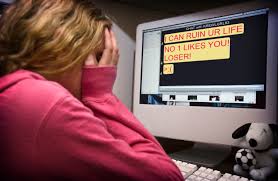 Why don’t they leave me alone?! According to Chinese tradition 2015 is the year of the Sheep. I hope it’s better than last year, which I called The Year Of The Bully.
At the start of 6th grade our son had a physical altercation at football practice. The harassment continued at school, extracurricular events, and on Social Media. We didn’t know because our son didn’t let us in on it, a typical response from tweens and teens who are being targeted.
He’d come home from practice upset, shirt torn, and occasionally with missing his cleats. At first we chalked it up to the rough nature of the game and forgetfulness. But other things indicated something was wrong. Some of the puzzle pieces we observed:
- Our son frequently complained about stomach aches and found it difficult to sleep at night.
- He was visibly upset and often would erupt in anger toward his younger sibling for no reason.
- We received emails from his teacher’s about his behavior and falling grades.
- He didn’t ask for friends to come over or to meet up at the movies.
- He suddenly stopped wanting to play on his tablet, the family computer, or use his online account with his gaming system.
- He would cry and refuse to go to Scouting functions or Church activities.
Looking back I can’t believe how blind we were. He was clearly exhibiting signs of being bullied at school and online.
One day I picked him up after football practice. Waiting by the field, I watched our son interact with his teammates. He walked barefoot to the van, desperately trying to hold back his tears. Finally, he let it all out. We felt terrible that we had failed to keep our child safe, but now, we could help and we got right to it.
Our first action was to alert his teachers, bus drivers, and school administrators. It was comforting to know there were extra eyes and ears to monitor the situation. I had a wonderful conversation with the principal who changed the seating chart for the bus ride, changed how the children lined up for lunch, and added a few more sessions about bullying into their counseling rotation. She was trying to educate students on the differences between positive ways to interact vs. aggressive behaviors.
Because 1 in 3 children are victims of cyberbullying and over half don’t report it to an adult, we began an open dialogue with our son. To protect himself, he changed his profile and names on Social Media and gaming sites. During the beginning of our journey, we opened and read all messages together and limited online contacts to friends and family only. We began to actively monitor his Internet and cell phone activity, using a convenient app that allows us to view all his accounts in one place. We also started interacting online with our son so the kids who were targeting him couldn’t miss our presence. Finally, we made a rule that digital technology would only be used in our common living area, no more kids online in isolation (exactly what harassers hope for.)
With a little effort and a lot of emotional coaching, our son is doing very well. He enjoys school again and now happily interacts with his friends online. His former harassers have improved their behavior, too. They probably didn’t understand they were crossing a line. All in all, with this situation behind us, I’d like to believe this experience will foster my son’s empathy and emotional fortitude to handle adversity.
Goodbye, Year of the Bully. Hello, Year of the Sheep. May it be lucky and prosperous for our family and yours.
April 23, 2015
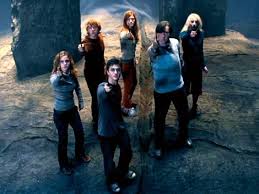 A Good Use of Power In our 40 years together, David and I have read many books. Add another hundred or so books on tape we’ve consumed on road trips. Yep, we’re addicted to good stories. So it wasn’t too weird when, after a business trip to Florida and a side trip to Universal’s Wizarding World, we decided to re-read all the Harry Potter books… aloud… to each other.
Starting in mid-December, I’d read a couple chapters over breakfast each morning. At dinner, with wine and candlelight, I’d read another chapter or so. If we were driving for more than 20 minutes in any direction, I’d read aloud in the car. (Yes, I can do that without barfing. Lucky me.) At the end of each day we’d watch the film adaptation of the current book, making sure to stop when we got to a new part (i.e., a section of film we hadn’t yet read.)
To date we’ve completed six books and six films. (When we get into something we really get into it.) We’re now half-way through Book 7.
Ever since the kids of Hogwarts took their education into their own hands, I’ve been thinking about the Dark Arts as it relates to the dark side of humanity. While we rarely hear about jinxes or debilitating spells, we’re plenty aware of public humiliation and shaming in social media. Character assasination is a curse, high on the list of Dark Arts. So how do we defend ourselves against the real and present danger of social garbage? How do we teach our kids to defend themselves, online and off, from the hostility of their peers? Where is Harry Potter when we need him?
When I think about what it means to defend oneself, I picture someone standing up for their rights or the rights of others and actively fighting back against the vitriol. But there is inherent danger when one uses vitriol to fight vitriol. The weapon we use has the power to infect us and make us more and more like the perpetrators we seek to vanquish. We can so easily become the enemy. Doing the right thing in a good way isn’t easy.
How do you help your children defend themselves against the prevailing Culture of Cruelty? How do you teach them not to succumb to its ways? Post here and let’s get into it. You can also follow my tweets at @Annie_Fox and @GirlDramaChat. Every Friday you can join the conversation as I host #girldramachat, a weekly Twitter chat (11AM PST) to help parents/teachers/counselors support girls thru friendship drama w/compassion, respect & social courage.
| |












 Facebook
 Twitter
